
Reading time: ~6 minutes
Table of Contents
- Introduction – how I first became interested in Tesla and electric cars
- The story and specs of the first Tesla electric vehicle
- Seeing a Tesla Roadster in the TV series Suits
- Why the character eventually chose a classic Ford Mustang
- Tesla as a symbol of luxury and status
The first time I really paid attention to a Tesla electric car was not at an auto show or in a car magazine. It happened while watching the TV series Suits. A scene featuring a sleek Tesla Roadster suddenly made me curious about electric vehicles, their technology, and how electric cars were changing the modern auto industry.
For many years the idea of electric cars sounded futuristic. Most people associated performance with gasoline engines and classic auto brands. But everything started to change when Tesla introduced its first electric vehicle, proving that an EV could be fast, stylish, and desirable.
Today Tesla is one of the most recognizable names in the world of electric cars, especially in places like Canada where interest in sustainable transport keeps growing.
The Story of the First Tesla Electric Vehicle
The first widely known Tesla electric car was the Tesla Roadster, introduced in 2008. It was based on a lightweight sports car platform but powered entirely by electricity.
Key characteristics of the Tesla Roadster
- Battery pack with thousands of lithium-ion cells
- Range of about 394 km (245 miles) per charge
- 0–100 km/h acceleration in about 3.7 seconds
- Top speed around 200 km/h
For the late 2000s, these numbers were impressive for an electric vehicle.
The Roadster proved that electric cars could compete with traditional auto manufacturers not only in efficiency but also in performance.
According to automotive journalist John Voelcker, who has tested early Tesla models:
“The Tesla Roadster was the moment people realized an electric vehicle could actually be exciting.”
That moment helped shape the entire EV industry.
The Moment I Noticed Tesla in Suits
Interestingly, my own attention to Tesla came from television.
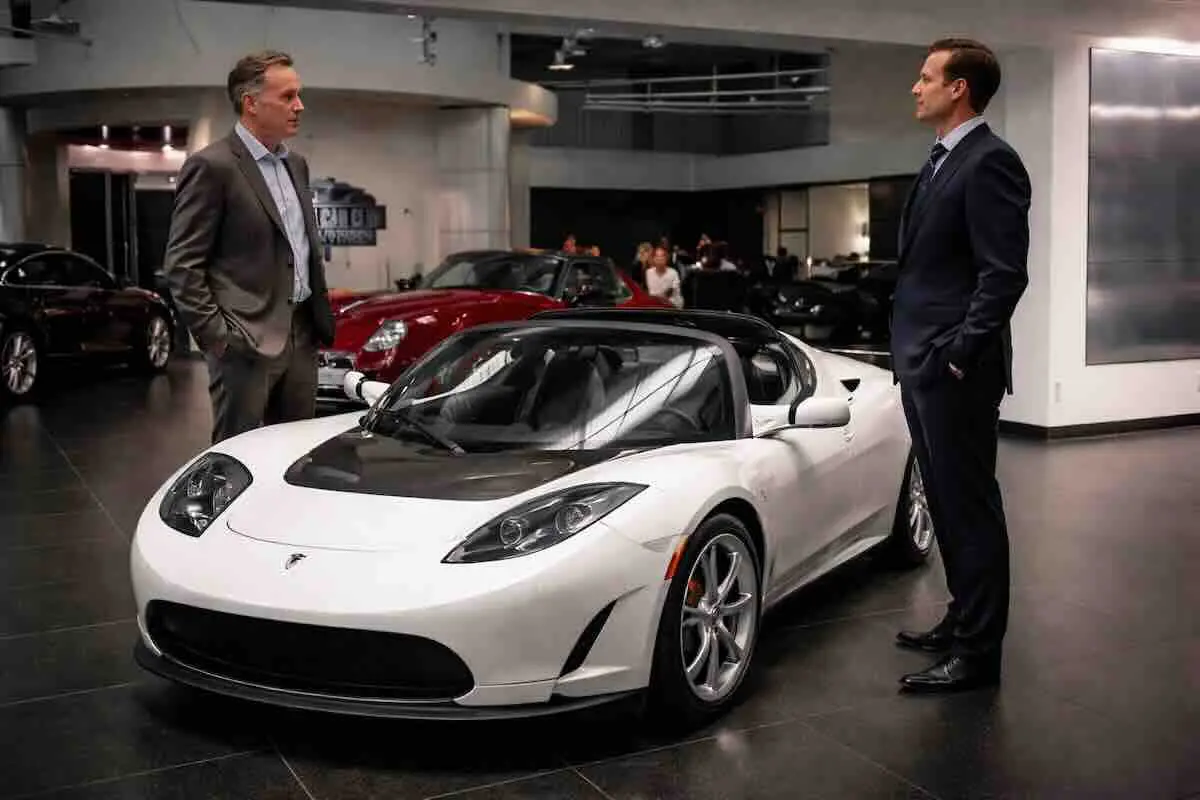
In the TV series “Suits”, the character Harvey Specter appears with a 2011 Tesla Roadster Sport in Season 1, Episode 3. The car immediately stands out: sleek, quiet, and futuristic.
In one scene Harvey even races the electric car against another vehicle before making a surprising decision.
At the time, many viewers were fascinated by the appearance of such an advanced electric vehicle on screen. According to enthusiasts from the Tesla Club, the Roadster was a popular cinematic car of that period.
Why Harvey Specter Chose a Classic Mustang
Despite the futuristic Tesla, Harvey Specter ultimately chooses something completely different: a classic Ford Mustang.
This moment in the show creates an interesting contrast between:
- modern electric cars
- traditional auto icons
The Mustang represents heritage and muscle-car culture, while Tesla symbolizes innovation and the future of electric vehicles.
That contrast is exactly what made the scene memorable.
Tesla as a Symbol of Luxury
Back then owning a Tesla electric car was not only about technology. It was also a sign of status.
The early Tesla Roadster cost over $100,000, placing it in the same luxury category as high-end sports cars.
Driving an electric vehicle like that meant you were:
- wealthy
- tech-savvy
- interested in innovation
In a way it had the same aura as arriving at a top luxury casino or an exclusive event. Both signal success and a taste for premium experiences.
Today electric cars are becoming more accessible, but Tesla still keeps a strong luxury image.
This luxury perception is reinforced by Tesla’s commitment to cutting-edge electric powertrain technology, sleek design, and impressive performance metrics that rival many conventional vehicles. Tesla models are often equipped with advanced features like autopilot capabilities, over-the-air software updates, and large touchscreen interfaces, enhancing both convenience and safety.
Moreover, Tesla’s focus on high-capacity electric batteries and efficient regenerative braking systems contributes to longer single charge ranges and lower maintenance costs, which appeal to discerning buyers seeking both performance and practicality. The brand’s growing network of charging stations and electric vehicle supply equipment also makes ownership more convenient, further supporting its premium positioning.
While the initial price point remains higher than many other vehicle types, Tesla benefits from various incentives and provided incentives in different regions, helping to offset costs for buyers. As production volumes increase and battery prices continue to decline due to technological advances and higher production volumes, Tesla aims to make its vehicles more affordable to a broader audience without compromising on quality or innovation.
In summary, owning a Tesla has evolved from being a niche luxury statement to a symbol of sustainable innovation that combines high performance, advanced technology, and environmental consciousness, appealing to a wide range of vehicle owners today.
FAQ
What was the first Tesla electric car?
The Tesla Roadster (2008) was the company’s first production electric vehicle, proving that EV technology could deliver sports-car performance.
How fast was the Tesla Roadster?
The original Tesla Roadster could accelerate from 0–100 km/h in about 3.7 seconds, making it one of the fastest electric cars of its time.
Why is Tesla important for electric vehicles?
Tesla helped transform public perception of electric cars, showing they could be powerful, desirable, and competitive with traditional auto brands.
Additional Impact of the Tesla Roadster
Beyond its impressive performance, the Tesla Roadster was groundbreaking because it utilized a high-capacity lithium-ion battery pack, which significantly extended the vehicle’s battery life and EV range compared to earlier electric vehicles. This innovation helped set new standards for battery electric vehicles (BEVs) and accelerated the adoption of electric motors in the automotive industry.
Tesla’s success with the Roadster also encouraged other manufacturers to invest in electric vehicle supply equipment and public charging infrastructure, addressing one of the major barriers to EV purchases—access to reliable charging stations. Furthermore, Tesla’s focus on fast charging technology and the development of an extensive network of public charging stations helped alleviate concerns about actual range and range anxiety, especially in extreme climates where battery performance can vary based on temperature.
Tesla’s innovation extended to incorporating advanced regenerative braking systems, which improved fuel economy by recovering energy during deceleration and feeding it back into the vehicle’s battery. This technology not only enhanced driving efficiency but also reduced maintenance costs by decreasing wear on brake components.
Overall, Tesla’s pioneering work has had a lasting impact on the electric vehicles evs market, influencing vehicle owners, manufacturers, and policymakers worldwide to prioritize cleaner, more efficient transportation options that reduce carbon emissions and noise pollution compared to internal combustion engine vehicles.