
Table of Contents
- Captivating Genesis: From the Concept Reveal to Instant Buzz
- The Heart of Risk: Engineering Ambition vs Reality
- A Twist of Fate: From Dream Specs to Production Reality
- Legacy on the Roads and in Collections
- FAQ – Jaguar XJ220 Insights
This article dives into the thrilling story of the Jaguar XJ220, from its stunning reveal at the Geneva Motor Show and the gambling‑like stakes engineers took to build it, through the technical hurdles that reshaped the car, to its enduring legacy as a revered supercar and prized collectible.
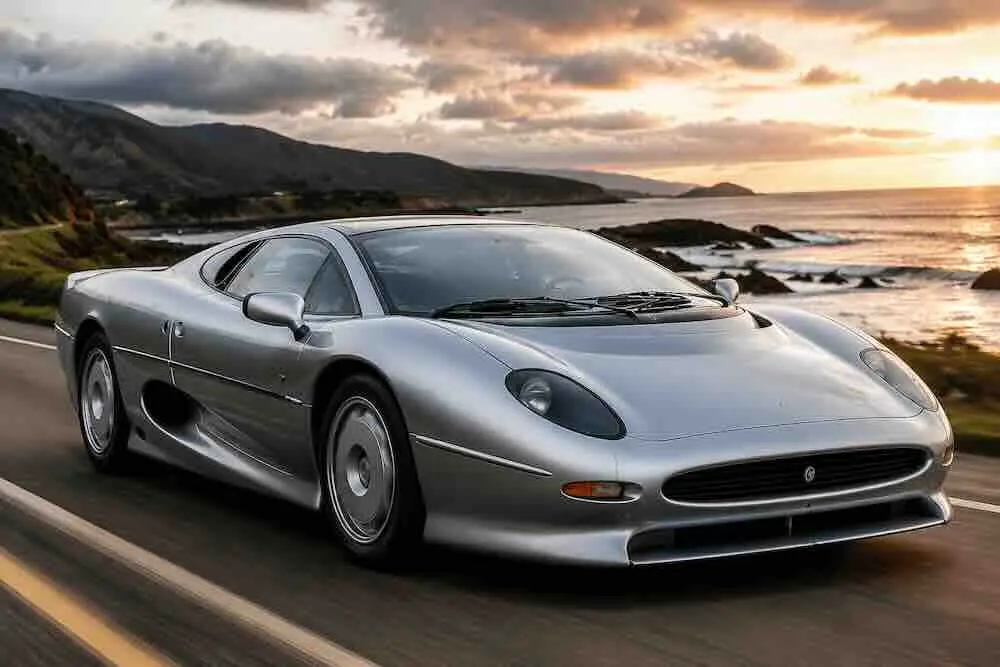
The Jaguar XJ220 was not just a feat of speed but also a showcase of innovative engineering and design. Its bodywork was hand-built from aluminum, reflecting a commitment to lightweight construction that was ahead of its time. This aluminum honeycomb chassis structure provided exceptional rigidity and safety, contributing to the car’s dynamic performance.
Behind the scenes, the collaboration between Jaguar executives and Tom Walkinshaw Racing (TWR) was a crucial joint venture that blended racing expertise with luxury car craftsmanship. TWR developed the racing version of the XJ220, known as the XJ220-C, which competed in the GT class at prestigious events like Le Mans. Although the racing version faced controversy over catalytic converters being removed, it demonstrated the vehicle’s potential on the track.
The engine itself was a masterpiece, derived from the MG Metro’s V64V engine, but extensively reworked into a modern version that delivered remarkable power and torque. The twin-turbocharged V6 was compact and lightweight compared to the original V12 concept, allowing for better packaging within the chassis and improved handling.
Despite its blistering speed and advanced technology, the XJ220’s interior maintained a level of luxury with Connolly leather trim, heated electrically adjustable seats, and air conditioning, blending comfort with performance. However, space was limited, emphasizing the car’s focus on driving experience over practicality.
The XJ220 also made headlines by setting world records for speed during testing, briefly holding the Guinness World Record for the fastest production car. Its lightweight design, combined with aerodynamic efficiency, made it a standout among sports cars of its era.
Over time, the XJ220 has become a symbol of Jaguar’s daring spirit and engineering prowess. Enthusiasts and collectors continue to celebrate the “big Jag” for its unique place in automotive history, its challenging development story, and its status as a vehicle that pushed boundaries in both road and racing contexts.
Captivating Genesis: From the Concept Reveal to Instant Buzz
In the late 1980s, development of the XJ220 began as an informal project by a group of Jaguar employees known as the Saturday Club. Although officially unveiled at the British International Motor Show in 1988 — a moment that captivated the automotive world and drew an overwhelmingly positive response — many Canadians also remember the buzz that followed Jaguar’s striking concept being showcased internationally around that era, including at the Geneva Motor Show where it set tongues wagging about its radical design and blazing potential.
The original Jaguar prototype was envisioned to house a mighty V12 engine and achieve a blistering 220 mph top speed — a number coded right into its name. This unleashed astonishment from crowds and media alike, stirring a question that resonated beyond the showroom floor: What drives a company to put its reputation on the line for pure speed?
Indeed, Jaguar took that risk — and after that response, moved the concept toward limited production, with early collectors so excited that nearly 281 deposits were placed based on the concept alone, essentially “betting” on a legend before it even existed as a production model.
The Heart of Risk: Engineering Ambition vs Reality
From V12 Dreams to Twin Turbo Technical Hardship
Behind the gleaming bodywork and aerodynamic curves was an ambitious plan. Jaguar’s initial concept was built around a robust V12 engine — a configuration beloved by performance purists and a tribute to Jaguar’s racing heritage. However, as engineering realities mounted, delivering that engine alongside advanced all‑wheel drive proved far more challenging than anticipated, so the production car instead adopted a rear wheel drive layout.
The company faced significant hurdles:
- V12 integration issues — the large engine and 4WD layout proved too complex for the planned production timeline.
- Turbocharger and emissions compliance — adapting the engine to meet evolving standards added cost and delays.
- Financial risk — the project already consumed millions, and failure could tarnish Jaguar’s status among luxury automakers.
Instead of the V12, Jaguar pivoted to a lighter, twin‑turbocharged V6 sourced from racing engines. The production car used a forced-induction 3,498 cc (3.5 L) unit that delivered 542 hp at 7,000 rpm and 475 lb⋅ft of torque at 4,500 rpm, giving it the power to remain one of its era’s standout supercars. It featured a 94 mm × 84 mm bore and stroke, dry sump lubrication, multi-point fuel injection with dual injectors, and an aluminum cylinder block and heads. The result was still extraordinarily potent but marked a departure from the original marketing promises, leading to mixed reactions among early buyers, even though the production car was developed from 1992 to 1994 in collaboration with Tom Walkinshaw Racing.
Professionals Speak: A Personal Insight
Chris Madden, a veteran technician at Jaguar Classic, has maintained XJ220s for decades:
“Each XJ220 we service still feels like engineering poetry. They were audacious when new, and they still demand respect today.” — Jaguar Classic technician, reflecting on 30+ years of hands‑on experience.
Specialist servicing is still essential for an XJ220 because of its complexity and performance focus.
This echoes the sentiment of many in the automotive restoration community: the XJ220 wasn’t just a car, it was a bold gamble that pushed engineering limits.
A Twist of Fate: From Dream Specs to Production Model Reality
When the production version finally arrived in the early 1990s, it was still breathtaking: it kept the concept’s aluminum body panels, but the production cars were substantially redesigned, losing the scissor doors and changing the overall length and wheelbase. The re‑engineered twin‑turbo V6 propelled the XJ220 from 0 to 60 mph in 3.6 seconds to a certified top speed of 212.3 mph (341.7 km/h), making it one of the fastest production cars of its era. Its aerodynamic package relied on a completely flat underbody to generate downforce. In a straight line, it was capable of astonishing pace, though its ride and track agility, along with some aspects of mechanical refinement, fell short of the best rivals and demanded careful control at the limit. Against the Ferrari F40 and Bugatti EB110, it was quicker on a speed-testing track but offered less traction and everyday drivability.
Yet the change from promised specifications to the final car, along with the onset of a global recession, meant some buyers who had placed deposits could not complete their purchases, leading to legal disputes over differences between the concept and production specifications — a financial and reputational risk that could have derailed Jaguar.
Jaguar’s PR Recovery
Jaguar navigated the backlash by emphasizing performance records and international test achievements, highlighting the real‑world speed potential of the XJ220 despite the deviations from initial specs. This helped preserve the brand’s credibility in key markets including Canada, where superfans exchanged stories and enthusiast posts shared many dramatic first impressions.
Legacy as the World’s Fastest Car: On the Roads and in Collections
Today, the Jaguar XJ220 is more than an artifact of engineering boldness — it’s a cult classic and collector’s treasure. Jaguar planned a limited production run of up to 350 cars, but production ended in 1994 after 281 were built, with several left unsold. The last unsold examples were sold in 1997 for £127,550 plus VAT, a final sale price that underlined fading demand before the model became truly rare and collectible. Values have climbed, and those who “bet” early are now vindicated as prices soar into the hundreds of thousands of pounds at auctions.
Enthusiasts often describe the XJ220 as an era‑defining machine that captured the spirit of 1990s supercar competition — where innovation, speed, and sheer daring shaped automotive history. Jaguar has even dedicated resources to maintaining these cars through the Jaguar Classic Workshop, ensuring owners can preserve performance and authenticity with specialist servicing support.
Reflective thought:Are you ready to take a risk — much like the engineers and early buyers — for the thrill of speed and automotive legend?
FAQ – Jaguar XJ220 Insights
Q: Why was the V12 engine replaced?A: Engineering constraints and changing emissions requirements made the original V12 design impractical for production, leading Jaguar to adopt a twin‑turbo V6.
Q: Was the Jaguar XJ220 ever the fastest production car?A: Yes — it recorded a 212.3 mph production figure and was capable of 0–60 mph in about 3.6 seconds, making it the fastest production car at the time.
Q: How many XJ220s were made?A: Production ran from 1992 to 1994 and ended at 281 cars, reflecting its limited production.
Q: Is the XJ220 a good investment?A: Many classic car collectors see the XJ220 as a strong investment due to its rare status, reinforced by the limited production run, and historical significance, with prices often exceeding early values.