Imagine building a racing car worth tens of millions of dollars, creating only one example in the world, and then watching that same car being destroyed. Not by a rival team, not by a reckless driver, but during a promotional video created by the manufacturer itself.
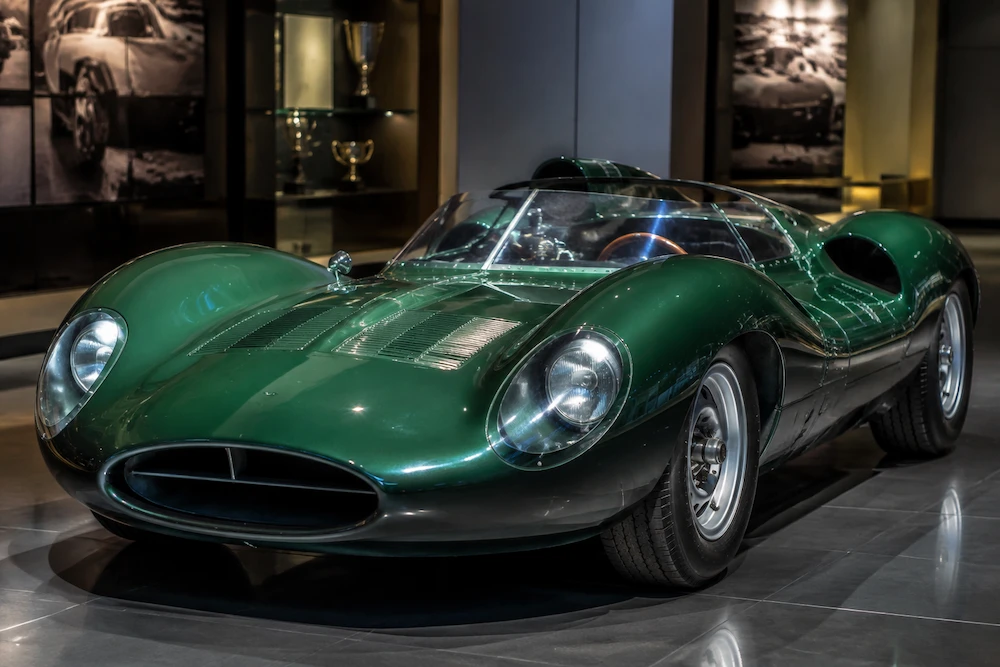
This is the unbelievable story of the Jaguar XJ13, one of the most beautiful and technically advanced racing prototypes ever built. Designed to challenge legendary rivals like Ferrari and Ford at Le Mans, the car never entered a single official race. Instead, it became famous for a heartbreaking accident that almost erased Jaguar’s greatest unfinished masterpiece.
The history of the Jaguar XJ13 proves that even brilliant engineering can become a victim of timing, regulations, and pure bad luck.
Jaguar’s Le Mans glory and the birth of a dream
During the 1950s, Jaguar became one of the dominant names in endurance racing. The company achieved legendary victories at the 24 Hours of Le Mans, proving that British engineering could compete against the strongest European manufacturers.
Models like the Jaguar C-Type and D-Type created a racing reputation built around speed, reliability, and innovation. However, after Jaguar reduced its official racing activities, the company’s attention moved toward road cars.
By the early 1960s, the racing world had changed. Ferrari was becoming stronger, while Ford was preparing its ambitious GT program. Jaguar wanted to return to endurance racing and create a machine capable of fighting for overall victory.
That dream became the Jaguar XJ13.
The project started secretly in the early 1960s, led by engineer Bob Blake and supported by Jaguar’s racing specialists. The goal was simple: create a British prototype capable of defeating Ferrari at Le Mans.
Unfortunately, history had different plans.
An engineering masterpiece ahead of its time
The Jaguar XJ13 was not just another racing prototype. It was a technological experiment that introduced ideas far ahead of Jaguar’s production cars.
At the heart of the machine was a completely new 5.0-liter V12 engine.
Technical highlights:
- Engine: 5.0-liter naturally aspirated V12
- Power output: approximately 500 horsepower
- Layout: mid-engine configuration
- Body: lightweight aluminum construction
- Transmission: five-speed manual gearbox
- Chassis: aluminum monocoque structure
- Suspension: independent suspension system
The mid-engine layout was especially important. At that time, many racing cars still used traditional front-engine designs, but Jaguar engineers understood that placing the engine behind the driver would improve balance and handling.
The aerodynamic body was inspired by Le Mans racing machines. The long tail, low nose, and aggressive proportions gave the XJ13 a futuristic appearance.
Even today, the car looks like something created decades ahead of its era.
Automotive historians often describe the XJ13 as a machine that combined British elegance with pure racing ambition.
Why the Jaguar XJ13 never reached the starting grid
The biggest tragedy of the Jaguar XJ13 was not the crash.
It was that the car never had the chance to compete.
While Jaguar engineers were developing the prototype, racing regulations changed. The international rules for endurance racing moved away from the type of large-engine prototype Jaguar had created.
The new regulations made the XJ13 almost irrelevant before it could prove itself.
The situation became even worse when Jaguar decided to focus on other priorities, including production vehicles and financial stability.
The XJ13 was simply:
- too expensive,
- too late,
- built for a racing world that no longer existed.
The prototype that was supposed to fight Ferrari and Ford became an abandoned dream.
The forgotten legend
After the project was canceled, the Jaguar XJ13 disappeared from public attention.
For years, the car remained hidden away, stored by Jaguar and rarely shown to enthusiasts. Unlike famous racing cars with championship victories, the XJ13 had no trophies, no famous races, and no official history on the track.
It became almost a forgotten experiment.
Few people outside Jaguar even knew the car existed.
Ironically, its failure helped create its legend. Because only one example was ever built, the XJ13 became one of the rarest Jaguar creations in existence.
The crash that became automotive history
The most dramatic chapter of the Jaguar XJ13 story happened in 1971.
Jaguar decided to create a promotional film featuring the legendary prototype. The company invited its famous test driver Norman Dewis to drive the car.
Dewis was not an inexperienced driver. He was one of Jaguar’s most trusted engineers and test pilots, having worked on many important Jaguar projects.
During filming at high speed, disaster struck.
A rear tire failed, causing the lightweight prototype to lose control. The Jaguar XJ13 left the road and rolled several times.
The result was devastating.
The beautiful aluminum body was almost completely destroyed.
Yet, incredibly, Norman Dewis survived.
Years later, Dewis recalled the accident as one of the most frightening moments of his career. His experience and the strength of the prototype’s structure likely saved his life.
The crash could have been the final chapter of the Jaguar XJ13.
Instead, it created a new beginning.
Why Jaguar restored the XJ13
Because the Jaguar XJ13 was the only one ever built, Jaguar decided that destroying it permanently was unacceptable.
The restoration process became a major challenge.
Specialists had to:
- recreate damaged aluminum body panels by hand;
- repair the unique chassis structure;
- preserve original engineering solutions;
- maintain the appearance of the original prototype.
The restored vehicle was not simply rebuilt as a replica. Jaguar wanted to keep as much of the original car as possible.
The result became one of the most important historical vehicles in Jaguar’s collection.
Where is the Jaguar XJ13 today?
Today, the Jaguar XJ13 remains one of the most valuable and recognizable cars connected with the brand.
The prototype is displayed as part of Jaguar’s heritage collection and continues to attract automotive enthusiasts from around the world.
A vehicle like the Jaguar XJ13 would likely be valued at tens of millions of dollars if it ever appeared at auction. However, such a sale is practically impossible because there is only one original example, and it belongs to Jaguar.
The XJ13 is not valuable because of race victories.
It is valuable because it represents ambition, innovation, and a story that almost disappeared forever.
Personal experience: Norman Dewis and the human side of the legend
According to information about the Jaguar XJ13 history, Norman Dewis was directly involved in testing the prototype and survived the famous 1971 crash. His experience gives the story a human dimension beyond technical specifications.
Dewis often emphasized that racing cars are not only about numbers but also about the people who build and drive them.
As he famously explained about testing legendary Jaguars:
“The car tells you what it wants to do. You have to listen.”
This philosophy helped define Jaguar’s racing history and explains why the XJ13 remains such an emotional symbol.
FAQ
Why was the Jaguar XJ13 never raced?
The XJ13 was developed for endurance racing, but changing regulations made its design unsuitable before it could compete.
How many Jaguar XJ13 cars were built?
Only one original Jaguar XJ13 prototype was ever created.
Who drove the Jaguar XJ13 during the famous crash?
Jaguar test driver Norman Dewis was behind the wheel during the 1971 accident.
Is the Jaguar XJ13 worth millions?
Yes. Although it has never been sold, experts believe a unique prototype like the XJ13 could be worth tens of millions of dollars.
The story of the Jaguar XJ13 is a reminder that even the greatest engineering projects can become victims of timing and circumstances. The car never won Le Mans, never defeated Ferrari, and never fulfilled its original mission. Yet because of its incredible design, tragic accident, and unique existence, it became one of Jaguar’s greatest legends.