Reading time: 7 minutes
Plan:
- Introduction: The Evolution of Bumblebee
- The Transformers Universe
- The History of Bumblebee
- Volkswagen Beetle: Iconic and Reliable
- Chevrolet Camaro: Performance and Power
- Conclusion: Bumblebee’s Transformation and Legacy
- FAQ Section
Introduction: The Evolution of Bumblebee
Bumblebee, one of the most beloved cars movie characters from the Transformers franchise, is known for his transformation from a Volkswagen Beetle to a Chevrolet Camaro. This article explores Bumblebee’s fascinating evolution across the Transformers films and TV shows, highlighting the significance of both vehicle forms and how they reflect his character’s growth.
Over time, Bumblebee has shifted between being a modest Volkswagen Beetle, symbolizing innocence and simplicity, to a Chevrolet Camaro, representing power and strength. This shift has mirrored his character development, making Bumblebee a famous classic car in his own right. The evolution from the humble Beetle to the muscle-bound Camaro and back shows not just his transformation in the Transformers universe but also how car enthusiasts and movie fans alike have embraced these classic autos.
Beyond the screen, Bumblebee’s vehicle forms have had a lasting impact on automotive culture. The Volkswagen Beetle, with its rear engine and distinctive rounded shape, is an emblem of 20th-century car design, beloved for its simplicity and reliability. In contrast, the Chevrolet Camaro is a quintessential American muscle car, known for its horsepower, aggressive styling, and performance on both street and track. Bumblebee’s dual identity bridges these two iconic eras and styles of automobiles, appealing to a broad range of car lovers.
The character’s popularity has even influenced merchandise, fan events, and car shows where replicas of Bumblebee’s Beetle and Camaro forms are showcased. This crossover between pop culture and automotive history highlights the unique place Bumblebee holds as a symbol of transformation—not only in the narrative sense but also in the evolution of car design and technology.
Moreover, Bumblebee’s story reflects themes of growth and adaptation, resonating with audiences who see in him a journey from modest beginnings to heroic achievements. His transformation from a small, unassuming sedan to a powerful, high-performance sports car mirrors the aspirations of many who appreciate both the heritage and innovation found in automobiles.
In summary, Bumblebee’s transformation from a Volkswagen Beetle to a Chevrolet Camaro encapsulates more than just a change in vehicle; it represents a narrative of character evolution, cultural significance, and the celebration of two of the most iconic cars in automotive history.
The Transformers Universe
The Transformers universe is vast, filled with battles between the Autobots and Decepticons, robots that can transform into various vehicles. Bumblebee, an Autobot, is one of the central characters in the series, known for his loyalty, courage, and selflessness. As one of the most relatable Autobots, Bumblebee’s character has earned a special place in the hearts of fans, especially because of his vehicle transformations.
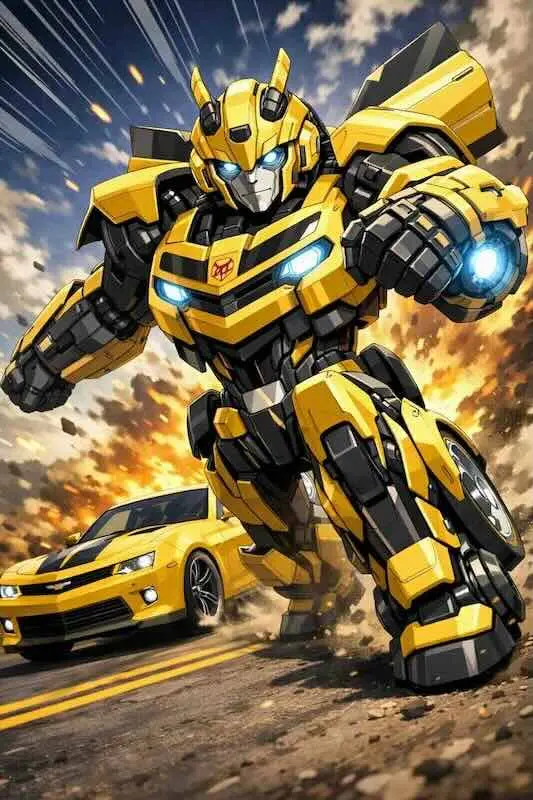
From his first appearance in the original 1980s Transformers TV series, where he transformed into a small, yellow Volkswagen Beetle, to his current form as a Chevrolet Camaro, Bumblebee has represented more than just a car. His vehicle form has changed throughout the years to reflect his growth and the changing tone of the Transformers franchise. Over time, he has become a famous classic car in pop culture, with his yellow paint and black racing stripes symbolizing his transformation.
The Transformers universe itself is a rich tapestry of stories, characters, and conflicts that have captivated audiences for decades. Originating from the planet Cybertron, the Autobots and Decepticons are two factions locked in an eternal struggle for control and peace. Each Transformer’s alternate vehicle form serves not only as a disguise but also reflects their personality and role within the faction.
Bumblebee’s choice of vehicle forms highlights his unique role among the Autobots. As a smaller, more approachable character, his initial form as a Volkswagen Beetle emphasized his accessibility and friendly nature. The Beetle’s iconic design made Bumblebee instantly recognizable and endeared him to fans worldwide. Conversely, his later transformation into a powerful Chevrolet Camaro underscored his evolution into a more formidable warrior, capable of taking on greater challenges.
Throughout the various iterations of the franchise—animated series, live-action films, comics, and video games—Bumblebee’s transformations have remained a focal point, symbolizing themes of growth, adaptation, and identity. His vehicle forms serve as metaphors for his journey from an underestimated scout to a key hero in the battle for Cybertron and Earth.
Moreover, Bumblebee’s transformation resonates beyond the fictional universe. It reflects broader cultural shifts in automotive design and popular tastes, bridging the gap between classic, reliable cars and modern, high-performance vehicles. This duality has helped maintain Bumblebee’s relevance across generations of fans and car enthusiasts alike.
In addition to his vehicle forms, Bumblebee’s character development is deeply intertwined with his relationships with other Autobots and human allies. His relatively small size and non-threatening appearance as a Volkswagen Beetle initially allowed him to blend into human environments, making him an ideal scout and messenger. This aspect of his character has been explored in various storylines, emphasizing themes of courage and determination despite physical limitations.
The evolution to the Chevrolet Camaro also reflects technological advancements and changing audience expectations. The Camaro’s sleek, aggressive design and powerful engine symbolize Bumblebee’s growth into a more assertive and combat-ready Autobot. This transformation aligns with the franchise’s shift toward more action-packed and visually dynamic storytelling, appealing to contemporary viewers.
Furthermore, Bumblebee’s transformations have inspired a wide range of merchandise, from toys and collectibles to video games and apparel. His dual identity as both a classic VW Beetle and a modern Chevrolet Camaro offers fans diverse ways to connect with the character, whether through nostalgia or excitement for cutting-edge automotive performance.
In summary, Bumblebee’s vehicle transformations are not merely cosmetic changes but integral elements that enrich his character and the broader Transformers universe. They encapsulate the themes of growth, identity, and cultural resonance that have made the franchise enduringly popular worldwide.
The History of Bumblebee
Bumblebee’s first transformation as a yellow Volkswagen Beetle in the 1980s Transformers cartoon set the stage for his future as an iconic figure in both the Transformers franchise and the world of classic cars. This early version of Bumblebee was small, unassuming, and friendly—traits that made him the perfect counterpart to the larger, more powerful Autobots.
As the years went on, particularly in the Michael Bay films, Bumblebee’s vehicle form evolved into a more powerful Chevrolet Camaro, reflecting his growth from a shy, humble Autobot to a courageous fighter. In the 2007 Transformers movie, Bumblebee first transforms into a 1977 Chevrolet Camaro, an old car with a vintage look. This vintage Camaro then evolves throughout the series, becoming a more modern version by the time of Transformers: Age of Extinction.
By 2018, Bumblebee’s vehicle form returned to its roots when the character starred in his solo film, Bumblebee, where he once again took the form of a Volkswagen Beetle, reminding fans of his origins. This shift back to the classic auto was a nostalgic moment for those who loved the original character.
Volkswagen Beetle: Iconic and Reliable
The Volkswagen Beetle, or “Bug” as it’s affectionately known, has been one of the most famous classic cars of all time. First produced in the late 1930s by the German automaker Volkswagen, the Beetle quickly became one of the best-selling cars in history, known for its unique design and reliability.
Key Features of the Volkswagen Beetle:
- Engine and Design: The Volkswagen Beetle was powered by a small, air-cooled 4-cylinder engine, which made it fuel-efficient and easy to maintain.
- Compact and Durable: Its compact size and durability made it an ideal car for families and individuals alike. Known for its “buggy” appearance, the Beetle became a symbol of simplicity and affordability.
- Cultural Impact: The Volkswagen Beetle became an icon in pop culture, with its distinctive shape and bright colors, especially in its yellow form as Bumblebee.
Chevrolet Camaro: Performance and Power
As the Transformers franchise progressed, Bumblebee’s transformation from a humble Volkswagen Beetle to a powerful Chevrolet Camaro symbolized his growth and the increasing stakes of the Autobots’ battles. The Chevrolet Camaro, introduced in the 1960s, is known for its muscle car status and powerful V8 engine.
The second-generation Chevrolet Camaro was featured as Bumblebee’s car form starting in Transformers (2007) and evolved through the films:
- 1977 Chevrolet Camaro: In the original movie, Bumblebee starts as an old 1977 Camaro, a car that reflects his initial humble nature before his evolution.
- Modern Camaro: By the time we see Bumblebee in Transformers: Age of Extinction, he has become a sleek fifth-generation Camaro with advanced technology, racing stripes, and a futuristic look.
The Chevrolet Camaro symbolizes strength, speed, and freedom, and these traits align perfectly with Bumblebee’s role in the Autobots.
Beyond its role in the Transformers films, the Chevrolet Camaro holds a significant place in automotive history as one of America’s most iconic muscle cars. Known for its aggressive styling, powerful engines, and impressive performance on both street and track, the Camaro has been a favorite among car enthusiasts since its debut. Its legacy includes a variety of models and special editions that have pushed the boundaries of speed and design.
The Camaro’s design has evolved over the decades, balancing modern technology with classic muscle car aesthetics. This evolution mirrors Bumblebee’s own transformation, moving from a simple, reliable vehicle to a high-performance machine capable of handling intense battles. The car’s distinct features, such as its bold front grille, aerodynamic shape, and signature racing stripes, make it instantly recognizable and a symbol of American automotive prowess.
In addition to its performance credentials, the Camaro has been celebrated for its cultural impact. It has appeared in numerous films, TV shows, and racing events, further cementing its status as a symbol of power and style. For fans of the Transformers franchise, Bumblebee’s Camaro form represents not only a powerful warrior but also a tribute to the enduring appeal of this classic muscle car.
Moreover, the Camaro’s engineering highlights include advanced suspension systems, powerful V8 engines with high horsepower ratings, and cutting-edge technology that enhances driving dynamics. These features make the Camaro a formidable vehicle both on the road and as Bumblebee’s chosen form in the fight against the Decepticons.
The transformation from the modest Volkswagen Beetle to the muscular Chevrolet Camaro is more than just a change in appearance; it reflects a narrative of growth, strength, and adaptation. Bumblebee’s journey through these iconic vehicles resonates with audiences as a metaphor for personal development and the embracing of one’s full potential.
In summary, the Chevrolet Camaro is not only a perfect fit for Bumblebee’s character evolution but also a celebrated icon in the world of performance cars. Its rich history, powerful capabilities, and cultural significance make it an ideal symbol of Bumblebee’s transformation from a friendly scout to a heroic defender.
Conclusion: Bumblebee’s Transformation and Legacy
Bumblebee’s evolution from a Volkswagen Beetle to a Chevrolet Camaro is a reflection of his journey throughout the Transformers universe. Starting as a humble, unassuming Beetle, Bumblebee grew into a powerful Camaro before returning to his roots in the 2018 Bumblebee film, where he transformed once again into a Volkswagen Beetle.
This transformation highlights Bumblebee’s character development, but it also speaks to the cultural impact these famous classic cars have had over the years. The Volkswagen Beetle and Chevrolet Camaro both have deep roots in automotive history and continue to be celebrated by classic car enthusiasts and fans of the Transformers franchise alike.
Beyond the narrative significance, Bumblebee’s vehicle forms represent two distinct eras and styles in automotive design. The Volkswagen Beetle, with its iconic rear engine and rounded silhouette, embodies simplicity, reliability, and an enduring charm that has made it one of the most recognizable cars worldwide. Its design and engineering innovations have influenced generations of automobiles and symbolize a cultural movement centered on accessibility and fun driving experiences.
On the other hand, the Chevrolet Camaro stands as a symbol of American muscle car heritage, known for its aggressive styling, powerful V8 engines, and impressive performance on both street and track. The Camaro’s presence in the Transformers films showcases the evolution of automotive technology and design, emphasizing speed, strength, and modernity.
Bumblebee’s transformation journey also mirrors broader themes of growth and adaptation, resonating with audiences who appreciate stories of overcoming challenges and embracing change. The character’s shift from a modest, approachable vehicle to a high-performance sports car reflects a narrative of empowerment and self-discovery, making Bumblebee a relatable and inspiring figure.
Moreover, the lasting popularity of both the Volkswagen Beetle and Chevrolet Camaro is evident in their continued presence at car shows, automotive museums, and enthusiast communities worldwide. These vehicles not only represent milestones in automotive history but also serve as cultural icons that connect generations of fans and collectors.
The enduring appeal of Bumblebee’s vehicle forms also highlights the importance of automotive design in storytelling. The choice of the Beetle and Camaro as Bumblebee’s alternate forms was deliberate, using the cars’ distinctive characteristics to communicate aspects of his personality and role within the Transformers narrative. The Beetle’s friendly, unassuming nature made Bumblebee approachable and relatable, while the Camaro’s bold, aggressive stance underscored his growth into a formidable warrior.
In addition, Bumblebee’s transformation has influenced the automotive and entertainment industries by inspiring collaborations, merchandise, and promotional events. Car manufacturers and movie studios have capitalized on the character’s popularity to create special edition vehicles, toys, and memorabilia, further cementing the bond between pop culture and automotive heritage.
In conclusion, Bumblebee’s transformation from a Volkswagen Beetle to a Chevrolet Camaro is much more than a change of vehicle; it is a celebration of automotive innovation, cultural significance, and character evolution. This dual legacy ensures that Bumblebee remains a beloved figure in both the world of Transformers and the broader landscape of automotive history.
FAQ Section:
Q: Why did Bumblebee transform from a Volkswagen Beetle to a Chevrolet Camaro?
A: Bumblebee’s transformation from a Volkswagen Beetle to a Chevrolet Camaro symbolized his character’s growth from humble beginnings to a more powerful and confident figure within the Transformers series.
Q: What is the significance of the yellow color in Bumblebee’s vehicle form?
A: The yellow color in Bumblebee’s vehicle form, whether as a Volkswagen Beetle or Chevrolet Camaro, has become his iconic feature, representing both his cheerful personality and his connection to Autobot values.
Q: How has the Volkswagen Beetle been influential in pop culture?
A: The Volkswagen Beetle became a cultural icon through its unique design, widespread popularity, and portrayal in various movies and TV shows, including as Bumblebee in Transformers.
Q: What makes the Chevrolet Camaro a good fit for Bumblebee?
A: The Chevrolet Camaro represents strength and performance, fitting Bumblebee’s transition to a more powerful and capable Autobot fighter, perfectly reflecting his evolution in the Transformers films.
Q: Are there any real-life events or promotions related to Bumblebee’s car forms?
A: Yes, both the Volkswagen Beetle and Chevrolet Camaro have featured in various promotional events, car shows, and fan gatherings celebrating Bumblebee and the Transformers franchise. These events often showcase replicas and custom builds inspired by Bumblebee’s iconic vehicle forms.
Q: How do car enthusiasts view Bumblebee’s transformation between these two cars?
A: Car enthusiasts appreciate Bumblebee’s transformation as a nod to automotive history, blending the charm and simplicity of the Volkswagen Beetle with the muscle and performance of the Chevrolet Camaro. This contrast highlights the evolution of car design and technology over the decades.
Q: Has Bumblebee’s transformation influenced sales or popularity of these cars?
A: The character’s popularity has positively impacted the visibility and nostalgia associated with both the Volkswagen Beetle and Chevrolet Camaro, contributing to renewed interest among collectors and fans, especially during the release of the Transformers films and related media.
Q: What other vehicles has Bumblebee transformed into throughout the franchise?
A: While primarily known for the Volkswagen Beetle and Chevrolet Camaro, Bumblebee has taken on other vehicle forms in various adaptations, including futuristic and alternate versions, reflecting the evolving nature of the Transformers storyline and technology.
Q: Where can fans learn more about Bumblebee and his vehicle transformations?
A: Fans can explore Bumblebee’s history and transformations through official Transformers media, fan websites, documentaries, and automotive exhibitions dedicated to iconic movie cars, providing detailed insights into his significance and evolution.
If you’re dreaming of owning a new Chevrolet Camaro, why not turn your luck into reality? You can win the funds needed for this powerful classic auto at WildTornado Casino. With exciting games and big rewards, you could be driving your Camaro sooner than you think!