
Reading time: ~7 minutes
Table of Contents
- Introduction: From tiny classic to modern electric vehicle
- The history and specs of the Fiat Topolino (1936)
- Comparing Topolino with another iconic small car: Volkswagen Beetle
- The modern Fiat Topolino EV and its features
- From classic cars to modern EV dreams — and a casino win
- Conclusion and call to action
- FAQ
Introduction: From tiny classic to modern electric vehicle
The world of classic cars is full of fascinating stories, but few vehicles are as charming and influential as the Fiat Topolino. Introduced in 1936, this tiny Italian car became one of the most recognizable old auto models of its era. Decades later, the name returned — this time attached to a small electric vehicle designed for modern cities.
Today, the evolution from gasoline-powered microcars to electric cars shows how automotive history continues to shape the future of mobility. The Topolino is a perfect example of how a design icon can transition from vintage engineering to a compact EV suited for sustainable urban transportation.
The history and specs of the Fiat Topolino (1936)
When the Fiat 500 “Topolino” debuted in 1936, it quickly became one of Europe’s most beloved small cars. The nickname “Topolino,” meaning “little mouse” in Italian, perfectly matched its compact appearance.
The Fiat Topolino was revolutionary for its time, offering an affordable and practical transportation solution during an era when car ownership was still a luxury for many. Its small size and efficient design made it especially popular in the narrow, winding streets of European cities. The vehicle’s lightweight construction contributed to its impressive fuel economy, which was a significant advantage during periods of economic hardship and fuel scarcity.
Beyond its mechanical attributes, the Topolino also represented a cultural shift. It symbolized mobility and independence for the average person, breaking down barriers that had previously limited car ownership to wealthier classes. This democratization of transportation helped spur social and economic changes across Europe.
The Topolino’s design philosophy has influenced generations of small vehicles, particularly in the realm of urban mobility. Its legacy lives on in today’s battery electric vehicles (BEVs), which prioritize compactness, efficiency, and reduced environmental impact. The modern Fiat Topolino EV, for example, carries forward this tradition by combining the charm of the original with the benefits of electric power.
In the context of evolving transportation technologies, the Topolino stands as a testament to how innovative design can adapt to meet changing needs. From a tiny mouse scurrying through the streets of 1930s Europe to a sleek electric microcar navigating modern cityscapes, the Topolino’s journey reflects the broader evolution of vehicle types aimed at sustainable and efficient mobility.
Key characteristics of the original Topolino
- Production began in 1936
- Designed as an affordable car for everyday drivers
- Small 569 cc four-cylinder engine
- Top speed around 85 km/h (53 mph)
- Extremely fuel efficient for its time
- Produced until 1955
The Topolino’s engineering was notable for its simplicity and efficiency. It featured a rear-wheel-drive layout and a front-engine design, which was advanced for a car of its size at the time. The vehicle’s compact dimensions made it ideal for navigating narrow European streets and contributed to its popularity among urban drivers.
Moreover, the Topolino’s affordability did not come at the expense of reliability. Its robust construction and easy-to-maintain mechanical components made it a practical choice for everyday use. This balance of cost, functionality, and durability was a key factor in the car’s widespread adoption.
The Topolino also influenced the design of future small cars, setting standards for fuel economy and compactness that resonated through subsequent decades. Its legacy can be seen in modern microcars and city-focused electric vehicles, which continue to prioritize efficiency and accessibility.
In addition, the Topolino’s cultural impact extended beyond its mechanical attributes. It became a symbol of economic recovery and personal freedom in post-war Europe, embodying the aspirations of a generation eager to embrace mobility and independence.
Overall, the Fiat Topolino stands as a landmark in automotive history, bridging the gap between early car manufacturing and the evolving needs of urban transportation.
Automotive historian Luca De Martino once noted:
“The Topolino wasn’t just a car. It represented freedom for thousands of families who could finally afford personal transportation.”
Comparing Topolino with another iconic small car: Volkswagen Beetle
When discussing historic small cars, it is impossible not to mention the Volkswagen Beetle. Both vehicles played a similar role in automotive history.
Similarities between Topolino and Beetle
- Designed to be affordable for the average driver
- Compact size and simple engineering
- Became cultural icons among classic cars
- Produced for decades with multiple variations
However, the Beetle was larger and eventually gained worldwide fame, especially in North America. Meanwhile, the Fiat Topolino remained a symbol of European microcar ingenuity.
Both cars are frequently featured at classic car shows, where collectors celebrate their role in shaping the early automotive industry.
The modern Fiat Topolino EV and its features
In 2023, the Topolino name returned — but this time as a fully electric urban microcar.
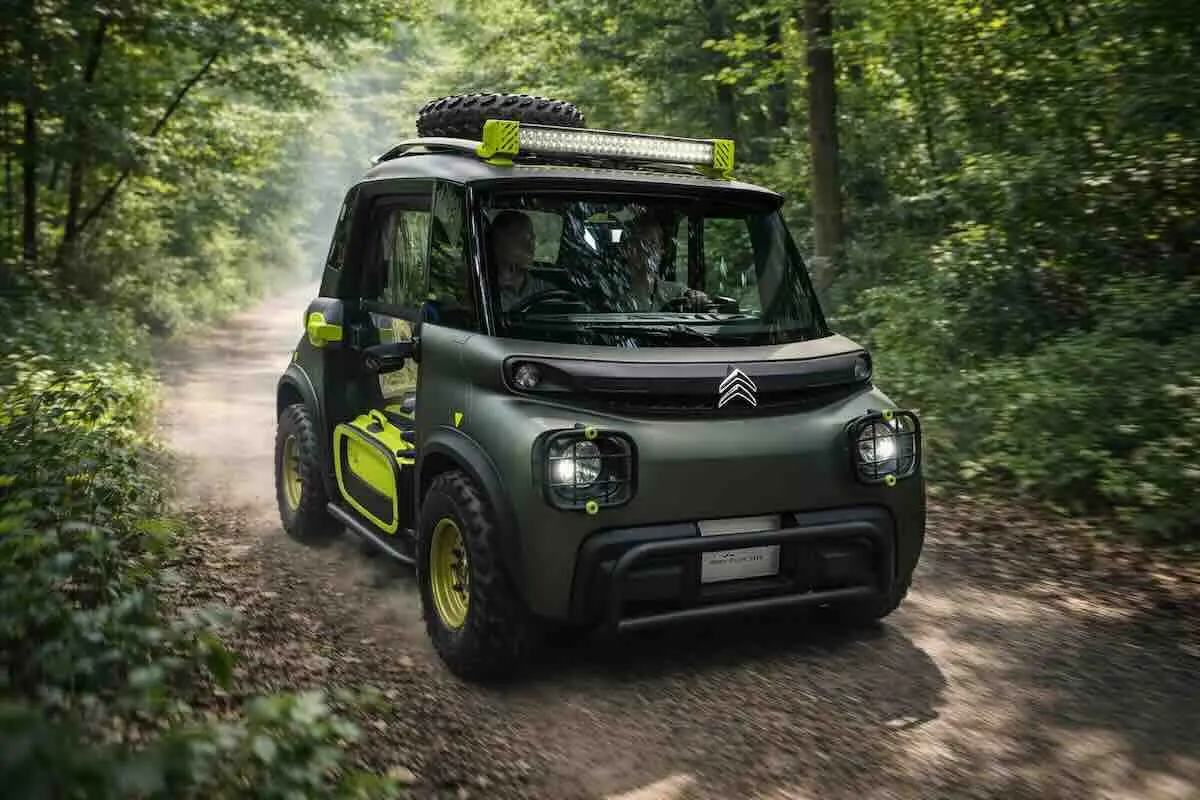
The modern Fiat Topolino EV shares a platform with the Citroën Ami, a small electric city vehicle designed for short urban trips. This collaboration highlights the growing trend among manufacturers to develop compact, efficient electric vehicles tailored specifically for city environments, where space is limited and emissions regulations are increasingly strict.
The Topolino EV is powered by an electric motor that drives the vehicle with quiet, smooth propulsion, producing zero tailpipe emissions. Its electric battery is designed to offer a practical range suitable for daily commuting, errands, and short trips within urban areas. Thanks to its lightweight construction and aerodynamic design, the vehicle achieves high efficiency, helping to maximize the EV range on a single charge.
Charging the Topolino EV is convenient and user-friendly. It can be plugged into standard electric vehicle supply equipment, including home chargers and public charging stations, making it easy to recharge the vehicle’s battery packs overnight or during the day. This flexibility supports the growing infrastructure of public charging stations in cities, encouraging EV adoption.
Moreover, the Topolino EV incorporates regenerative braking technology, which recovers energy during deceleration and feeds it back into the battery, further extending the vehicle’s driving range and improving overall energy efficiency. This feature is especially beneficial in stop-and-go urban traffic, where frequent braking occurs.
By embracing electric propulsion, the modern Topolino helps reduce noise pollution and carbon emissions compared to conventional vehicles powered by internal combustion engines. It represents a shift toward sustainable transportation solutions that align with global efforts to combat climate change and reduce reliance on fossil fuels.
As production volumes increase and battery prices continue to decline, vehicles like the Fiat Topolino EV become more accessible and affordable to a wider audience. This trend supports the broader transition to electric vehicles and contributes to cleaner, quieter, and more efficient urban mobility.
In summary, the Fiat Topolino EV combines the charm of a classic microcar with the advantages of modern electric vehicle technology. It is capable of operating efficiently in city environments, providing an eco-friendly alternative to traditional small cars while maintaining the practicality and style that made the original Topolino an icon.
Specifications of the modern Topolino EV
- Fully electric vehicle
- Top speed around 45 km/h
- Electric range about 75 km
- Compact two-seat cabin
- Designed for urban commuting
- Ultra-lightweight design
This modern EV focuses on sustainable mobility rather than performance. It is ideal for crowded cities where parking and traffic are major challenges.
For drivers exploring the future of electric cars, the Topolino demonstrates how automotive heritage can inspire innovative modern solutions.
From classic cars to modern EV dreams — and a casino win
Owning a classic microcar or a modern electric vehicle might seem like a distant dream for many people. Yet sometimes unexpected opportunities can make it possible.
Imagine visiting a casino, enjoying a few games, and suddenly hitting a lucky win. Even a single jackpot could be enough to fund the purchase of a small EV like the modern Fiat Topolino.
Many players enjoy entertainment platforms like WildTornado Casino, where exciting games and bonuses offer the chance to win real prizes.
Of course, casino games should always be enjoyed responsibly, but sometimes luck really does surprise you.
Conclusion: A small car with a big legacy
The Fiat Topolino remains one of the most charming stories in automotive history. From its humble beginnings as an affordable old auto in 1936 to its rebirth as a modern electric vehicle, the Topolino perfectly illustrates how innovation and tradition can coexist.
Whether you admire classic cars or are excited about the rise of electric cars, this tiny vehicle proves that even the smallest designs can leave a lasting impact.
If you’re feeling lucky today, you might even imagine winning enough to buy your own compact EV. Explore the games and bonuses at WildTornado Casino and see where your luck takes you.
FAQ
What is the Fiat Topolino?
The Fiat Topolino was a small Italian car produced between 1936 and 1955. It became one of the most recognizable classic cars in Europe.
Is there a modern electric version of the Topolino?
Yes. Fiat introduced a modern electric vehicle called the Fiat Topolino EV, designed for short urban trips and city mobility.
How fast is the modern Topolino EV?
The modern electric Topolino has a top speed of about 45 km/h, making it suitable for city driving.
Why is the original Topolino famous?
The original model helped make car ownership affordable in Europe and is now considered one of the most famous classic cars.
Can small EVs replace traditional city cars?
Many experts believe compact electric cars will play a major role in future urban mobility due to their efficiency and small footprint.
Additional FAQs about Fiat Topolino and Electric Vehicles
What kind of battery does the Fiat Topolino EV use?
The Fiat Topolino EV is equipped with a lithium-ion battery pack, which provides a balance of energy density and longevity suitable for urban driving needs. This battery technology allows for efficient energy storage and supports regenerative braking to extend driving range.
How long does it take to charge the Topolino EV?
Charging times for the Topolino EV vary based on the type of charging station used. Using standard home electric vehicle supply equipment (EVSE), a full charge typically takes several hours, making overnight charging convenient. Public charging stations can offer faster recharge options depending on their power output.
What is the range of the Fiat Topolino EV on a single charge?
The Topolino EV offers an electric range of approximately 75 kilometers (about 47 miles), which is well-suited for daily urban commutes and short trips within city limits.
Does the Topolino EV produce any tailpipe emissions?
No. As a battery electric vehicle, the Topolino EV produces zero tailpipe emissions, contributing to improved air quality and reduced greenhouse gases in urban environments.
How does regenerative braking work in the Topolino EV?
Regenerative braking recovers kinetic energy during deceleration and converts it back into electrical energy, which is stored in the vehicle’s battery. This process improves overall energy efficiency and helps extend the vehicle’s driving range.
Are there any incentives for purchasing electric vehicles like the Fiat Topolino EV?
Many governments and local authorities provide incentives such as tax credits, rebates, or reduced registration fees to encourage the adoption of electric vehicles. These incentives help offset the initial purchase cost and support the transition to cleaner transportation options.
Can the Fiat Topolino EV be charged at public charging stations?
Yes. The Topolino EV is compatible with public charging stations, which are increasingly available in urban areas to support electric vehicle owners. This accessibility makes it easier to recharge the vehicle while away from home.
How does the Topolino EV compare to other small electric vehicles?
The Fiat Topolino EV shares similarities with other compact electric vehicles designed for city use, such as the Citroën Ami. Its focus on lightweight design, efficiency, and ease of use makes it a competitive option for urban drivers seeking sustainable transportation.
Is the Topolino EV suitable for highway driving?
The Topolino EV’s top speed of around 45 km/h limits its use primarily to urban and suburban environments. It is not designed for highway driving, where higher speeds are required for safety and traffic flow.
How does the Topolino EV contribute to reducing noise pollution?
Electric motors operate quietly compared to internal combustion engines, significantly reducing noise pollution in cities. The Topolino EV’s silent operation helps create a more pleasant urban environment for pedestrians and residents.
What maintenance does the Fiat Topolino EV require?
Electric vehicles generally require less maintenance than conventional combustion engine vehicles due to fewer moving parts. The Topolino EV benefits from reduced service needs, such as less frequent brake replacements thanks to regenerative braking, and no oil changes.
How does the Fiat Topolino EV support sustainability goals?
By using electric power instead of fossil fuels, the Topolino EV helps reduce carbon emissions and dependence on non-renewable energy sources. Its compact design encourages efficient use of urban space and aligns with broader environmental initiatives to combat climate change.
Are there plans for future versions of the Fiat Topolino EV?
While specific announcements vary, the trend toward electrification suggests that manufacturers like Fiat may continue to develop and improve small electric vehicles, incorporating advancements in battery technology, range, and features to meet evolving consumer needs.
These additional FAQs provide a more comprehensive understanding of the Fiat Topolino EV and its role in modern electric vehicle adoption, helping readers make informed decisions about urban mobility options.