
Table of Content:
- Introduction: The EV1 — A Bold Move in Electric Cars
- GM introduces one of the first mass-produced electric vehicles, the EV1.
- The Pressure of the Oil Industry and Market Forces
- Cheap gasoline and political shifts impacted the EV market.
- The EV1’s Demise: Why GM Destroyed Its Early Electric Cars
- GM recalls and destroys most EV1 vehicles.
- The controversy surrounding the destruction and protests from EV1 owners.
- A Strategic Mistake or Calculated Risk?
- Examining the financial, technological, and political pressures that led to the EV1’s destruction.
- The Return of GM to Electric Cars: The Chevy Bolt and Beyond
- The rise of Tesla and the growing demand for electric cars led GM to re-enter the market.
- Conclusion: Did GM Lose Its Electric Leadership?
- A reflection on whether GM’s early electric venture was a lost opportunity or simply ahead of its time.
General Motors’ decision to destroy the EV1, one of the first mass-produced electric vehicles, has remained a point of controversy. With protests from owners who were not allowed to buy their leased vehicles, the company’s actions raised questions about the future of electric cars. Was it a strategic mistake, or was GM simply too early with its electric vehicle gamble?
Introduction: The EV1 — A Bold Move in Electric Cars
In the 1990s, General Motors (GM) made a bold bet on electric cars by releasing the EV1, one of the first mass-produced electric vehicles. GM debuted the EV1 as a new model at a major auto show in the fall, marking a significant launch in automotive history. The EV1 was called the EV1 to emphasize its unique identity and branding within GM’s lineup.
The EV1 was technologically advanced for its time, boasting impressive range and performance for an electric car. The project was a GM-owned initiative, developed by a dedicated team of engineers who faced significant challenges in bringing the car to market. Its development involved extensive testing, and the innovative platform, use of electric motors, and reliance on electricity set it apart from other vehicles of the era.
The EV1’s battery capacity was notable, offering performance that compared favorably to the batteries used in hybrid cars and even some solar powered cars of the time. It featured advanced gear and parking brake systems, which were highlighted in media outlets like Top Gear, Popular Mechanics, and Popular Science for their innovation. However, the high cost of production and limited sales impacted the EV1’s commercial success, especially in markets like Europe, where small electric hatchbacks were becoming increasingly popular.
The EV1’s intended purpose was to influence the entire industry and pave the way for future electric vehicle models, setting new standards for technology and design.
Design and Features: What Made the EV1 Unique
When General Motors debuted the EV1, it wasn’t just another electric car—it was a showcase of forward-thinking design and technology that would influence electric vehicles for decades. The EV1’s most striking feature was its aerodynamic shape, engineered to slice through the air with a drag coefficient of just 0.19—lower than most cars on the road even today. This sleek profile wasn’t just for looks; it was a critical factor in maximizing energy efficiency and extending the vehicle’s range.
The EV1’s lightweight aluminum frame reduced overall weight, while specially developed low rolling resistance tires from Michelin minimized energy lost to friction. These innovations allowed the EV1 to achieve a range of 60 to 100 miles on a single charge, a remarkable feat for its era. Inside, the car featured a pioneering heat pump system for climate control, using about one-third the energy of traditional heating and cooling systems—another nod to efficiency that would become standard in future electric vehicles.
One of the EV1’s most advanced features was its regenerative braking system. By blending brake pedal input with electric motor braking, the car could recover energy during deceleration, feeding it back into the battery and further extending range. The EV1 was also among the earliest examples of a software-defined vehicle, with integrated systems that managed everything from battery performance to climate control. Some models even hinted at early autonomous driving capabilities, foreshadowing the smart, connected cars of the future.
In short, the EV1 was a technological marvel, combining cutting-edge design, energy-saving systems, and innovative features that set the stage for the next generation of electric vehicles.
Performance and Capabilities: How the EV1 Drove
Behind the wheel, the EV1 delivered a driving experience that surprised many skeptics of electric vehicles. Its electric motor produced 137 brake horsepower, propelling the car from 0 to 60 mph in about eight seconds—a figure that rivaled many gasoline-powered cars of its time. While the production model’s top speed was electronically limited to 80 mph to preserve battery life, a specially prepared prototype shattered expectations by reaching a record-breaking 183.8 mph, proving the untapped potential of electric propulsion.
The EV1’s handling was equally impressive. Thanks to its low center of gravity—courtesy of the underfloor battery pack—and responsive steering, the car felt agile and planted on the road. The original battery pack consisted of 26 lead-acid batteries, carefully arranged to optimize weight distribution and energy efficiency. Later, GM introduced models equipped with nickel-metal hydride (NiMH) batteries, which boosted the EV1’s range to between 120 and 140 miles on a full charge, addressing one of the main concerns about electric cars: range anxiety.
The combination of brisk acceleration, smooth power delivery, and quiet operation made the EV1 a standout in its class. Its performance and capabilities not only attracted a loyal following but also laid the groundwork for future electric vehicles like the Chevy Bolt, which continue to build on the lessons learned from the EV1’s innovative engineering.
The Pressure of the Oil Industry and Market Forces
At the time of the EV1’s release, the world was largely dependent on gasoline-powered vehicles. Cheap gasoline and a booming oil industry made it hard for electric vehicles to gain widespread popularity. The high cost of producing electric vehicles like the EV1, combined with technical and engineering challenges, made it difficult to achieve significant sales and commercial viability. Moreover, political changes, including shifts in environmental regulations, started to weaken the incentives for automakers to focus on electric vehicles. The oil industry’s influence, through organizations like OPEC, helped keep gas prices low, which further reduced the appeal of electric cars. In contrast, Europe began to see growing interest in small, affordable electric vehicles, as automakers there addressed these challenges and started to increase EV adoption.
The EV1’s Demise: Why GM Destroyed Its Early Electric Cars
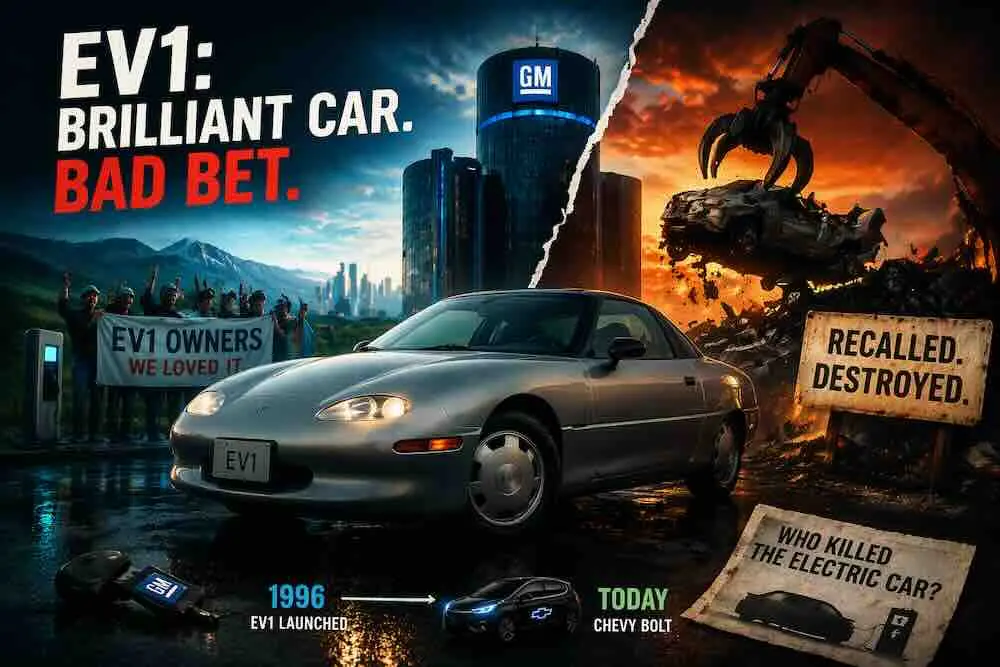
By the early 2000s, GM made the shocking decision to recall and destroy most of its EV1 vehicles. High production costs and limited sales were major challenges for the EV1 program, making it difficult to justify continued investment. This controversial move sparked protests from EV1 owners who were not allowed to buy the cars they had been leasing. Many of these vehicles were destroyed, while some were locked away in a GM warehouse. The question remains: why destroy the cars instead of selling them to customers? Some point to the industry pressures, while others argue that GM feared losing control over the technology or felt it was economically unfeasible to continue production.
The team of engineers behind the EV1 faced significant challenges, particularly with battery capacity and achieving the intended goals of range and performance. Despite extensive testing and the use of an advanced platform, these technical and economic hurdles influenced the decision to end the program. The combination of high cost, limited sales, and the challenges encountered by the engineering team ultimately led GM to discontinue the EV1.
Key Questions:
- Why did GM destroy the EV1 instead of selling it?
- Was the destruction motivated by economic or technological reasons?
- Could GM have profited from keeping the EV1 on the market?
A Strategic Mistake or Calculated Risk?
When GM decided to destroy the EV1, the company was playing a risky game. The team of engineers faced significant challenges in balancing the intended goals of the EV1—such as pioneering electric vehicle technology—with the high cost of production and limited sales. These factors, including the technical and economic hurdles encountered by the team, heavily influenced GM’s strategic decision-making. On one hand, they were ahead of the curve, introducing a revolutionary technology at a time when electric cars had little appeal. On the other hand, the costs of manufacturing the EV1 were high, and GM’s commitment to fossil fuel-driven vehicles was deeply entrenched. Industry pressure, coupled with the lack of immediate consumer demand, led to the eventual destruction of the vehicles. Some argue this was a strategic error, while others see it as a calculated risk that ultimately did not pay off.
The Return of GM to Electric Vehicles: The Chevy Bolt and Beyond
Years later, as the electric vehicle market began to show signs of life, GM returned to electric cars with the Chevy Bolt. The Chevy Bolt is a small electric hatchback built on a new platform, and its launch marked GM’s renewed commitment to electric vehicles. The Bolt’s sales have demonstrated steady growth, especially in markets like Europe where demand for small electric vehicles is strong. The rise of Tesla and growing environmental concerns drove the shift in consumer preferences. GM, recognizing the importance of electric vehicles in the future, re-entered the market with the Bolt and has since expanded its electric car offerings with new models.
Lessons Learned: The EV1’s Legacy in Today’s EV Landscape
The story of the EV1 is more than just a chapter in General Motors’ history—it’s a blueprint for the entire industry’s journey toward sustainable transportation. Although the program ended prematurely, the EV1’s influence is unmistakable in today’s electric vehicles. Technologies pioneered by the EV1, such as regenerative braking and heat pump climate systems, are now standard features in modern electric cars, enhancing energy efficiency and driving range.
The EV1’s focus on lightweight construction, aerodynamic design, and integrated software systems inspired a new generation of affordable, efficient electric vehicles. Models like the Kia EV1 and Chevy Bolt owe much to the groundwork laid by GM’s early experiment, as do advances in battery technology, from lead-acid to NiMH and beyond. The push for autonomous driving and software-defined vehicles can also trace roots back to the EV1’s innovative approach to vehicle management and control.
Perhaps most importantly, the EV1 demonstrated the importance of investing in new technologies and embracing innovation, even in the face of uncertainty and industry resistance. Its legacy is seen in the growing demand for electric vehicles, the rapid pace of technological development, and the commitment of companies like General Motors, Kia, and Chevrolet to providing sustainable transportation solutions for a changing world.
As the industry continues to evolve, the lessons of the EV1 remind us that bold ideas and persistent innovation are essential to shaping the future of mobility—one electric car at a time.
Conclusion: Did GM Lose Its Electric Leadership?
Looking back, it’s clear that GM had the chance to lead the electric car revolution. The EV1 served as a model for the entire industry, influencing future platforms and inspiring teams of engineers to overcome significant challenges in electric vehicle development. However, their early bet with the EV1 came at a time when the market wasn’t ready, and their decision to destroy the vehicles sealed their fate. High production costs and limited sales also contributed to GM’s loss of electric leadership. Could GM have become the “casino that always wins” by betting on electric cars early on? Or was it simply a miscalculated risk that didn’t pay off? In the world of innovation, sometimes companies lose not because they made mistakes, but because they were simply too early to the table.